

Not because we like to slow things down, but because in custom metal and plastic parts, most cost overruns and delays are decided before the first price is ever sent.
First, drawings are never just drawings.
We don’t look at them as shapes. We look at how they will be made.
Two parts can look identical on paper and end up with very different prices.
Why?
Because tolerance, datum choices, surface finish, and even how features relate to each other determine the process, tooling, cycle time, and inspection method.
This is why we often ask questions before quoting.
If a tolerance is not functionally critical, relaxing it slightly can reduce cost significantly.
If a feature is critical, we need to know why, not just how tight it is.
Second, quantity changes everything.
A part that makes sense for CNC at 50 pieces may not make sense at 5,000.
A mold that looks expensive at first glance may become the cheapest option over time.
We often ask about annual volume or future plans, not to push tooling, but to avoid quoting a solution that will age badly after the first order.
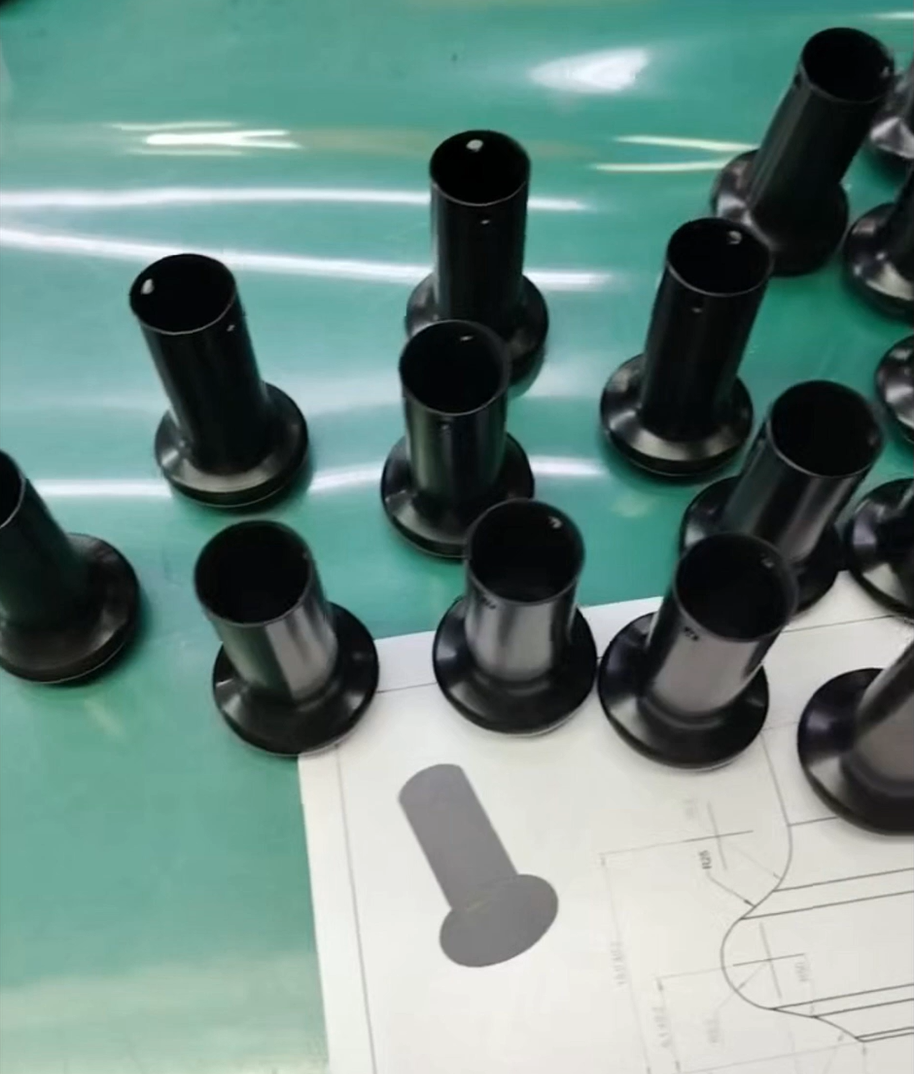
Third, material is not just a name on the drawing.
The same grade can behave very differently depending on form, supplier, and downstream processing.
Sometimes we suggest alternative materials that meet the same functional requirements with better availability, lower cost, or more stable quality.
This is not a downgrade. It is a risk management decision.
Fourth, surface finish affects more than appearance.
Coating, plating, anodizing, or texture choices can change lead time, yield, and even dimensional stability.
If the finish is cosmetic, we treat it one way.
If it affects fit, wear, or electrical performance, we treat it another.
Finally, we care about what happens after delivery.
How the part will be assembled.
How it will be inspected.
What failure would look like in real use.
These answers help us quote not just a price, but a process that works.
We believe a good quotation is not the lowest number.
It is a decision made with clear assumptions on both sides.
If you are open to discussing these points, we are usually able to offer a more accurate price, a more stable lead time, and fewer surprises later on.