

CALL TO SCHEDULE YOUR FREE!
8618160764297
Toggle Navigation
Die casting is one of the most efficient manufacturing processes for producing large quantities of metal components. However, it is not always the best solution. Depending on production volume, lead time, dimensional requirements, and part geometry, CNC machining may provide a more economical and technically suitable alternative.
Understanding when to replace die casting with CNC machining can help manufacturers reduce tooling costs, shorten product development cycles, and improve overall part quality.
One of the biggest advantages of die casting is its low unit cost in mass production. Once the tooling investment has been recovered, thousands or even millions of identical parts can be produced efficiently.
For prototype projects, bridge production, or low-to-medium volume manufacturing, however, the economics change significantly.
Die casting requires dedicated tooling, which involves engineering, mold manufacturing, sampling, and process validation before production can begin. These upfront costs and lead times may not be justified for limited production quantities.
CNC machining eliminates the need for tooling altogether. Parts can be manufactured directly from CAD models, allowing projects to move into production much faster while avoiding expensive mold investments.
Although modern die casting delivers excellent dimensional consistency, its achievable tolerances are still limited by factors such as metal shrinkage, mold wear, and thermal expansion.
For components requiring:
tight dimensional tolerances
precision mating surfaces
accurate hole positions
high-quality threaded features
secondary CNC machining is often required after die casting.
For this reason, manufacturing the component entirely by CNC machining may be more practical, especially when only a limited number of parts are required.
In addition, CNC machining avoids common die casting-related defects such as:
porosity
shrinkage cavities
incomplete filling
flash caused by die wear
making it a preferred choice for highly engineered components.
Many engineers assume that complex parts automatically favor die casting.
In reality, the opposite is often true.
Complex die castings frequently require:
side slides
cores
inserts
lifters
These additional tooling mechanisms increase mold cost, extend manufacturing time, and raise maintenance requirements.
Some geometries that appear simple may also create filling difficulties during die casting, especially when thin walls, thick sections, or uneven wall transitions are involved.
For low-volume production, CNC machining can often manufacture these features more efficiently without requiring complicated tooling.
Switching from die casting to CNC machining is more than simply changing the manufacturing process.
A part originally optimized for die casting should be redesigned to fully leverage the advantages of CNC machining.
Several key design considerations should be reviewed.
Draft angles are essential in die casting because they allow the part to be ejected from the die after solidification.
CNC machining has no such requirement.
Keeping unnecessary draft angles often requires additional multi-axis machining or ball-end milling, increasing machining time and production cost.
Unless required by the product function, draft angles should be removed when redesigning for CNC machining.
Deep pockets and large internal cavities increase machining time because more material must be removed.
They can also reduce part rigidity during machining, increasing the risk of vibration or distortion.
Where functional requirements permit, designers should:
reduce unnecessary pocket depth
simplify internal features
add ribs or supporting structures when additional stiffness is required
These improvements typically reduce machining cost while improving dimensional stability.
Die casting generally benefits from relatively uniform and thin wall sections to promote proper metal flow and reduce shrinkage defects.
CNC machining is less restricted by these considerations.
Extremely thin walls may become flexible during machining and are more susceptible to vibration or deformation.
When redesigning for CNC machining, maintaining sufficient wall thickness can improve machining stability without significantly affecting production efficiency.
The optimal wall thickness should always balance structural requirements, machining accessibility, weight, and material cost.
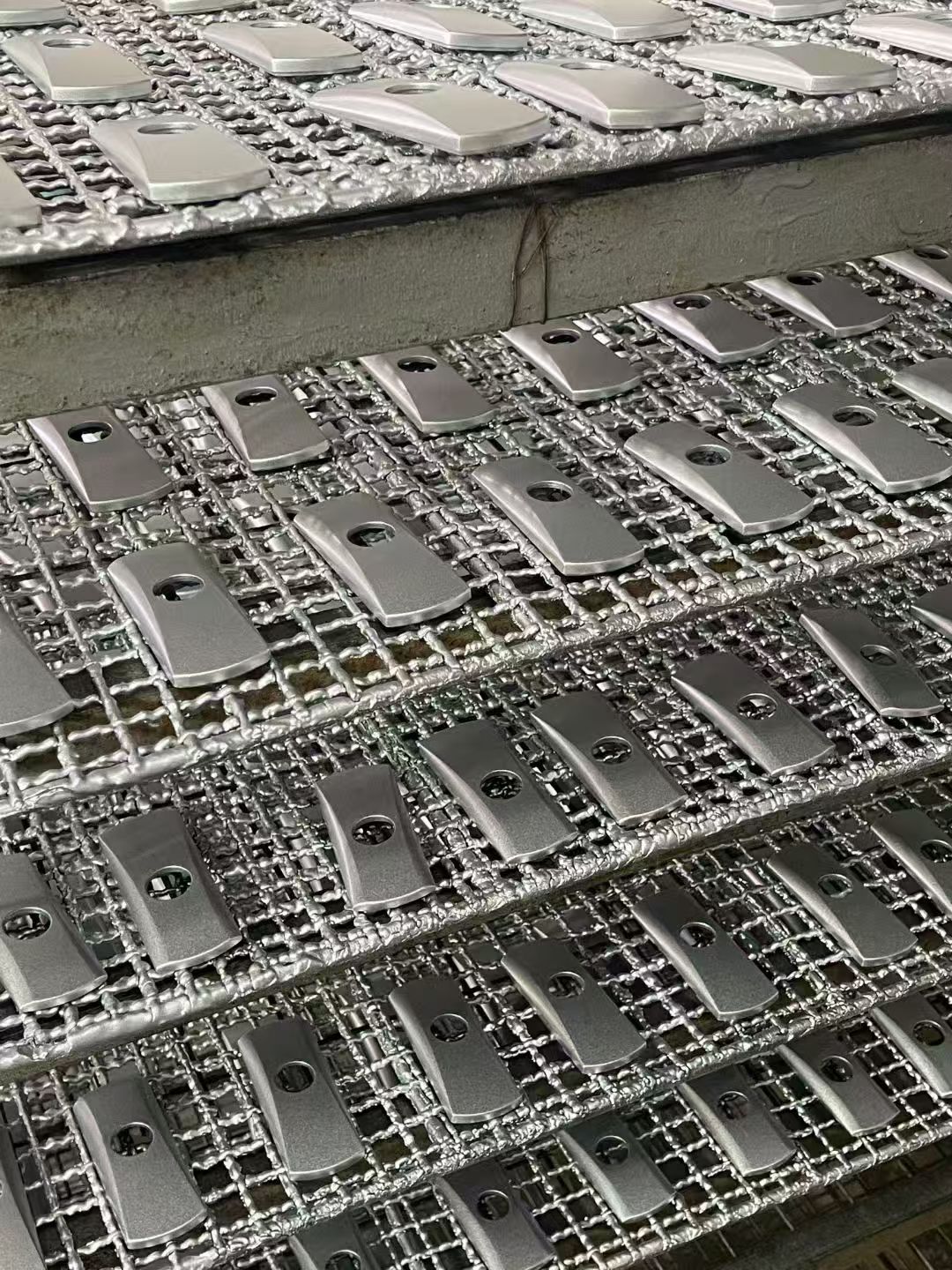
Many die cast parts intentionally use wider tolerances to accommodate casting variation.
When converting to CNC machining, these design compromises can often be eliminated.
Critical dimensions, precision holes, bearing locations, sealing surfaces, and assembly interfaces can all benefit from tighter machining tolerances, resulting in improved product performance and assembly consistency.
Material selection is another advantage of CNC machining.
While die casting primarily utilizes aluminum, zinc, and magnesium alloys, CNC machining supports a much broader range of engineering materials, including:
aluminum alloys
carbon steel
alloy steel
stainless steel
brass
copper
titanium
engineering plastics
This flexibility allows engineers to prioritize mechanical performance, corrosion resistance, weight, or cost without being constrained by casting requirements.
Die casting remains the preferred manufacturing process for high-volume production where tooling costs can be spread across thousands of parts.
However, CNC machining often becomes the better choice when projects demand:
low or medium production volumes
shorter lead times
higher dimensional accuracy
flexible material selection
rapid design changes
elimination of tooling investment
If a part was originally designed for die casting, redesigning it specifically for CNC machining—not simply machining the existing casting design—can significantly improve manufacturability, reduce production costs, and achieve better overall performance.