

CALL TO SCHEDULE YOUR FREE!
8618160764297
Toggle Navigation
CNC machining cost is not determined by machining time alone. Material selection, part geometry, tolerances, tooling, workholding, surface finish, and inspection requirements can all have a significant impact on the final cost of a machined part.
The important point is that many of these cost factors are determined before the part reaches the CNC machine.
A design that is unnecessarily complex may require longer machining cycles, specialized cutting tools, additional setups, slower cutting conditions, or more extensive inspection. By considering manufacturability during the design stage, engineers can often reduce CNC machining costs without sacrificing the function or performance of the part.
Below are 10 practical CNC design guidelines that can help make parts more cost-effective to manufacture.
One of the most effective ways to reduce CNC machining cost is to keep the part geometry as simple as the application allows.
Complex geometries require more complicated toolpaths and may require additional machining operations or multi-axis equipment. Freeform surfaces, deep pockets, and numerous small features can significantly increase programming and machining time.
Whenever possible, use simple geometric features such as planes, cylinders, and cones. Avoid adding curved surfaces, blends, or decorative features that do not provide a clear functional benefit.
Deep cavities often require long-reach cutting tools. As tool length increases, tool rigidity decreases, making vibration and deflection more difficult to control. Machining conditions may therefore need to be reduced, increasing cycle time.
Where possible:
Keep cavities as shallow as practical.
Avoid unnecessarily narrow pockets and slots.
Use internal corner radii that can be produced with standard tools.
Consider whether a deep feature can be redesigned or produced using another manufacturing process.
If a very deep cavity is unavoidable, alternatives such as a split-part design, a different starting blank, casting, or forging may sometimes reduce the amount of material that needs to be removed by CNC machining.
Standardization can make CNC machining more efficient.
Machine shops commonly have a wide range of standard drills, end mills, taps, and other cutting tools available. Designing features around commonly available tooling can reduce the need for special tools and simplify machining.
If a hole does not require a specific non-standard diameter, consider using a standard metric or imperial drill size.
For example, standard diameters such as 3, 4, 5, 6, 8, or 10 mm are generally easier to produce than an unusual custom size.
The same principle applies to slots and pockets.
A slot designed around a commonly available end mill can often be machined more efficiently than one requiring a special cutter.
When the application permits, consider using standard slot widths and combining standard holes and straight slots instead of creating unnecessarily complicated profiles.
The goal is simple: design the part around readily available tooling whenever possible.
Thin walls can be challenging to machine because they are more susceptible to vibration, deflection, and deformation from cutting forces.
When a wall is too thin, the machinist may need to use lighter cutting passes and lower feed rates. Additional finishing passes may also be required to achieve the specified dimensions.
Therefore, do not make walls thinner than necessary simply to reduce material usage.
The appropriate minimum wall thickness depends on several factors, including:
Material
Wall height
Part geometry
Cutting tool diameter
Machining strategy
Required tolerance
Metals generally allow thinner walls than many plastics, but even relatively rigid metals can deform when a wall is tall and unsupported.
Instead of relying on a single minimum thickness for every application, evaluate wall thickness together with the feature's height, length, and required accuracy.
Material selection has a direct influence on CNC machining cost.
Different materials behave very differently during machining. Their hardness, thermal properties, toughness, and tendency to generate tool wear all affect cutting conditions and cycle time.
Aluminum alloys are generally highly machinable and can be cut at relatively high speeds. They are widely used for housings, brackets, structural components, and prototypes.
However, the specific aluminum alloy should still be selected according to the required mechanical properties, surface treatment, and application.
Steel generally requires more conservative cutting conditions than aluminum. Depending on the grade and hardness, machining can require more cutting time and may cause greater tool wear.
Steel remains an appropriate choice when strength, durability, wear resistance, or other mechanical properties are important.
Many engineering plastics are relatively easy to machine and can be useful for prototypes, lightweight components, electrical insulation, and functional testing.
However, plastics can be more sensitive to heat, deformation, and dimensional changes than metals. Material selection should therefore consider both machining behavior and the operating environment.
The objective is not simply to choose the easiest material to machine. It is to choose the least costly material that still satisfies the actual functional requirements of the part.
Overly tight tolerances are one of the most common ways to increase CNC machining cost unnecessarily.
A tighter tolerance may require more precise machining strategies, additional finishing operations, better workholding, temperature control, and more detailed inspection.
It can also increase the risk of rework or scrap.
This does not mean tight tolerances should be avoided. They should be applied where they have a functional purpose.
Examples include:
Shaft and hole fits
Bearing seats
Locating features
Sliding interfaces
Sealing surfaces
Gear-related features
Features that must align with mating components
Other features may not require the same level of precision, such as:
Non-functional external surfaces
Decorative features
Weight-reduction holes
Cooling openings
General chamfers and fillets
Non-machined surfaces of cast or forged components
A useful design principle is:
Tolerance should be driven by function, not by habit.
Applying a tight tolerance to every dimension may make a drawing look precise, but it does not necessarily make the part better. It often makes the part more expensive.
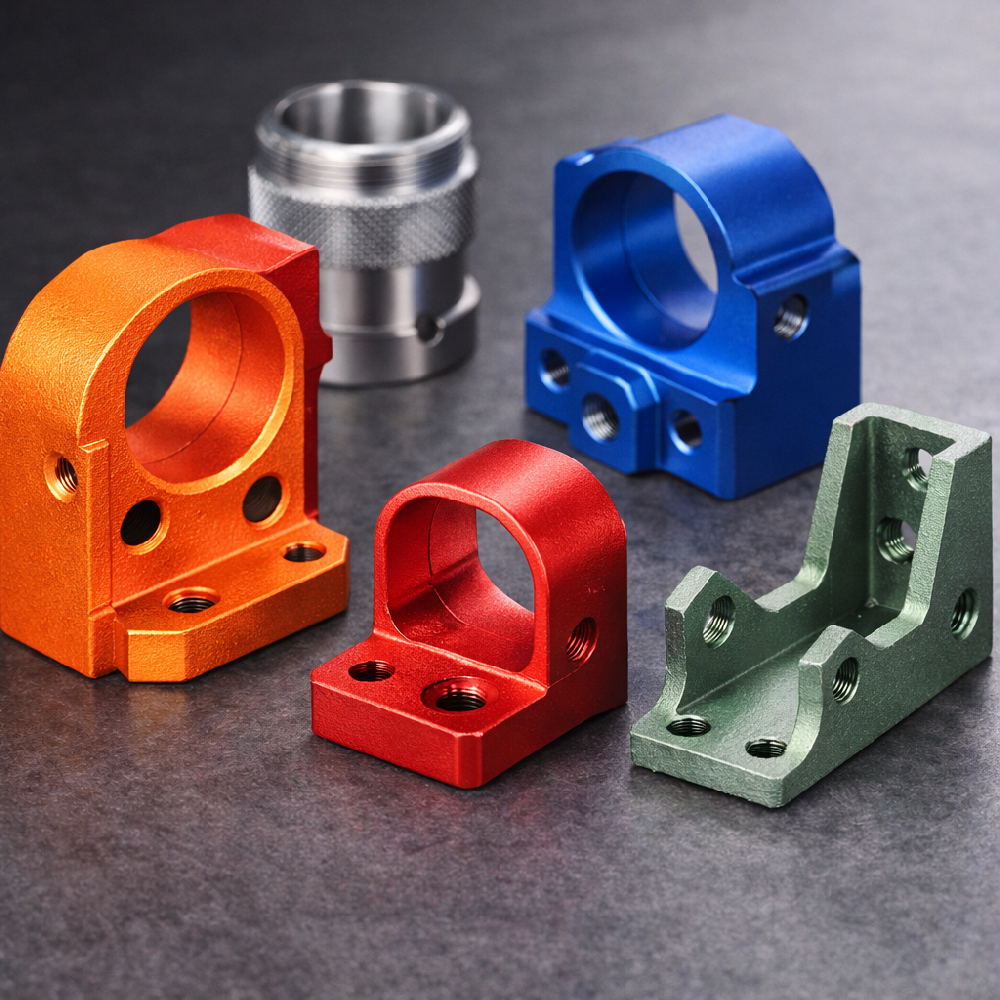
Some features are inherently more difficult and time-consuming to machine.
Deep holes and deep narrow slots are common examples.
As hole depth increases relative to diameter, chip evacuation becomes more difficult and drilling becomes more sensitive to tool deflection and heat.
Long drills may also be required, increasing the risk of vibration or deviation.
If possible, avoid unnecessarily deep holes. When deep holes are required, the hole design should be evaluated together with the material, diameter, tolerance, and required production volume.
Deep narrow slots create a similar problem. A long, slender cutting tool has reduced rigidity and is more susceptible to vibration and deflection.
Where possible:
Increase slot width.
Reduce unnecessary depth.
Use larger internal radii.
Provide better access for cutting tools.
Consider whether the feature can be redesigned.
The easier it is for a standard cutting tool to access the feature, the easier it is generally to manufacture.
Every time a part has to be repositioned or re-clamped, additional machining time is required.
Multiple setups can also introduce additional workholding requirements and potential variation between machining operations.
For example, a part that requires machining on several unrelated surfaces may need to be flipped multiple times. Features that are angled relative to the primary reference surface may also require special fixtures or additional machine-axis movements.
When designing a part, consider how it will be held during machining.
Whenever practical:
Place important features on the same or adjacent accessible surfaces.
Keep critical locating features related to a common datum.
Avoid unnecessary features on difficult-to-access surfaces.
Design the part so that as many operations as possible can be completed in one setup.
Good design considers not only what the finished part looks like, but also how the part will be positioned and machined.
Small details around edges can have a surprisingly large effect on machining efficiency when they are repeated across a part.
A small internal radius requires a small cutting tool. Smaller tools generally have lower rigidity and may require more conservative cutting conditions.
Where the application permits, use larger internal radii that can be produced with standard cutting tools.
For example, rather than specifying an extremely small internal corner radius throughout a pocket, consider whether a larger radius would provide the same functional result.
Chamfers are useful for assembly, deburring, safety, and appearance. However, adding chamfers to every edge without a functional reason can create additional machining operations.
Different chamfer dimensions may also require different tools or additional tool adjustments.
A more cost-effective approach is to:
Keep chamfer sizes consistent where possible.
Remove purely decorative chamfers.
Use standard tooling dimensions.
Add edge treatments only where they provide a clear benefit.
The same principle applies to fillets: use them where they improve function or manufacturability, not simply because the CAD model allows them.
Surface finish requirements can also increase CNC machining cost.
A very smooth surface may require additional finishing passes, slower cutting conditions, different tooling, or secondary finishing processes.
Therefore, surface roughness should be specified according to the function of the surface.
For example, a bearing seat, sealing surface, or sliding interface may require a controlled surface finish, while a hidden structural surface may not.
If appearance is important, consider applying higher finishing requirements only to visible or customer-facing surfaces rather than the entire part.
This approach can reduce unnecessary processing while still achieving the required appearance and performance.
CNC machining is highly versatile, but it is not always the most economical process for every geometry or production volume.
A design that works well for a prototype may not be the most cost-effective solution for tens of thousands of parts.
Depending on the application and production quantity, processes such as casting, forging, sheet metal fabrication, injection molding, or die casting may provide a more suitable starting point, followed by CNC machining only where precision is required.
For example, instead of machining a complex component entirely from a solid block, a cast or forged blank may reduce the amount of material that needs to be removed.
The best manufacturing strategy is therefore not simply about asking:
Can this part be CNC machined?
It is also about asking:
What is the most efficient way to achieve the required function, accuracy, appearance, and production volume?
Reducing CNC machining cost does not mean making every feature simpler or relaxing every specification.
The goal is to eliminate unnecessary manufacturing difficulty while keeping the features that are essential to the part's function.
Before finalizing a CNC design, consider:
Can the geometry be simplified?
Can standard hole and slot sizes be used?
Are the walls thick enough for stable machining?
Is the selected material appropriate for the application?
Are tight tolerances limited to functional features?
Are deep holes, slots, or cavities really necessary?
Can the number of setups be reduced?
Are all fillets and chamfers necessary?
Is the specified surface finish appropriate?
Would another manufacturing process be more economical at the required production volume?
Good CNC design is not about removing details. It is about making sure that every manufacturing requirement has a reason to exist.
By considering manufacturability early in the design process, engineers can reduce machining time, tooling requirements, setup time, and inspection effort while maintaining the required performance of the finished part.
If you have a CNC machined part that you would like to review for manufacturability or cost optimization, feel free to contact us. We can help evaluate the design and identify potential manufacturing considerations before production begins.